Hey everyone, thanks for stopping by—whether you’re a lab tech troubleshooting a sticky blend, a production manager tired of inconsistent batches, or just curious about how that centrifugal mixer you keep hearing about actually works, you’re in the right spot. I’ve been in the mixing and blending equipment game for over a decade now, and let’s be real: most of the questions I get aren’t “can this mix two powders?” They’re “how does it not make that weird clump I’ve been fighting for months?” or “why isn’t this like the old paddle mixer that takes twice as long and still sucks?” Today, I’m breaking down exactly how centrifugal mixers function—no stuffy textbook jargon, just real-world answers that actually matter if you’re working with materials that need to blend right. Mixing and Blending Equipment

First off, let’s kill a common myth right out the gate: a centrifugal mixer isn’t just a fancy spinny thing. Yeah, it uses rotation, but that’s where the similarities end with a kitchen blender or a industrial paddle mixer. Most of us who work with this stuff call it a planetary centrifugal mixer, and that “planetary” part is non-negotiable. Let me paint a quick picture, no CAD drawings needed. Imagine a little cup (we call it a mixing container or sometimes a cartridge, depending on the industry) that holds your raw materials—say, epoxy resin and hardener, or silicone and a pigment, or even dry powders that hate clumping. That cup sits in a holder, and the whole holder is mounted on a rotating arm.
Here’s the two-part spin that makes it work, and it’s genius. First, the arm itself spins around the center of the mixer—like how the Earth orbits the Sun. That’s the centrifugal force everyone talks about, right? The force that flings stuff outward when you spin it. But here’s the twist: the cup itself is also spinning, in the opposite direction of the arm. If the arm is zipping around clockwise, the cup is spinning counter-clockwise at a super specific, matched speed. Why? Because if both spun the same way and same speed, the whole thing would just sit there, not moving the materials inside. The matched, opposite rotation makes the materials inside get tugged in two directions at once. It’s like if you’re holding a plate and spinning it around your head, but also spinning the plate itself back the other way—your sandwich on the plate doesn’t slosh off, it gets pulled evenly across the whole surface.
Now, let’s get into what that actually does for mixing. Let’s say I’m working with a sample that’s super common in our lab: 100g of two-part epoxy, one part resin, one part hardener. If I used a paddle mixer, what happens? The paddle chugs through the thick resin, whipping tiny air bubbles into the mix (the bane of every industrial part), and leaves a little ring of unmixed material around the edge of the container. Not with centrifugal mixers. The dual rotation creates what we call a “shear flow” across the entire volume of the material. Shear is just the force that makes layers of a material slide past each other—like when you rub your hands together, that’s shear. But here, it’s evenly distributed, not just where the paddle is. The centrifugal force flings every particle (or liquid molecule) toward the outer wall of the cup, and the counter-rotation spins that outer material back toward the center. So every single bit of your mix is getting pushed, pulled, slid, and moved around constantly, not just stirred in one circular loop.
Wait, and don’t sleep on the bubble thing—this is where centrifugal mixers absolutely crush other mixers. Ever had a batch that looked perfectly mixed, only to pop it under a vacuum (which we often use with these) and watch 20 tiny bubbles rise to the surface? A lot of that bubble issue comes from entrainment—air getting sucked into the mix when a paddle cuts through the material. But centrifugal mixing? The way the materials flow, paired with the centrifugal force, actually pulls air out of the mix instead of pushing it in. Let me explain that simply. When you spin the material, any tiny air voids inside the mix are less dense than the surrounding material, so the centrifugal force pushes the denser material outward, which squeezes the smaller air bubbles toward the center of the cup. Those bubbles then rise up (since they’re less dense) and get vented through any ports on the mixer, or you can pair it with a vacuum pull to suck them out even faster. That’s a huge win for industries that need zero bubbles—like potting electronics, making high-grade adhesives, or even blending cosmetics where a bubble can ruin a product.
Let’s talk about different material types because this isn’t a one-size-fits-all. I’ve mixed dry powders with liquid binders, super thick pastes, low-viscosity inks, even tiny beads for 3D printing—centrifugal mixers adapt way better than people think. For dry powders, say, carbon black pigment and a polymer powder that likes to clump, the shear flow from the dual rotation tears apart those clumps mechanically. There’s no paddle dragging through the powder and leaving chunks because every layer is sliding past each other, so even the small clumps get broken down evenly. For really thick materials, like a silicone that’s as thick as peanut butter, the centrifugal force is strong enough to move that heavy stuff without needing to crank up speed so high it splatters. We adjust the rotational speeds based on the material’s viscosity, particle size, what we’re trying to achieve. That’s another thing that makes it work—no one-size-fits-all settings. We can dial in the arm speed, the cup’s spin speed, even the length of time it mixes, depending on your needs.
Wait, let’s bust another myth: people think centrifugal mixers only work for small batches. No, we have units that hold 50kg batches—perfect for a production line that’s making adhesives for construction, or metal powders for 3D printing. Even at large scale, that dual planetary spin is the same, just the components are built tougher to handle heavier loads. I worked with a metal parts manufacturer last year who was using a paddle mixer for 25kg batches of metal powder and a binder; it would take 45 minutes and still had 10% uneven clumping. We swapped them to a centrifugal mixer, and they cut mix time to 8 minutes, no clumps, and zero air entrainment that was ruining their parts during sintering. That’s real results, not just lab talk.
Now, what about the parts that actually make this function, so you get why it’s reliable? The main working components are the drive system for the arm, the drive system for the cup’s rotation, the mixing chamber, and the holders for the containers. Most good centrifugal mixers (the ones we sell, anyway) have precise motor controls—they don’t just spin at one speed the whole time; they’ll ramp up speed slowly at first for fragile materials, then crank up the shear for a bit to break clumps, then slow down to avoid splattering. The holders are designed to grip containers securely, even at high speeds—no one wants a container flying across the room mid-mix, trust me, I’ve seen it and it’s not fun. The chamber is sealed, so you can do vacuum mixing if you need that bubble-free result, or even fill the chamber with an inert gas if you’re working with materials that oxidize easily, like certain metal powders.
Let’s contrast this with other common mixers to drive home why centrifugal is better for so many jobs. Paddle mixers (also called agitators) rely on physical contact with the material—their blades move the material, so you get uneven shear, dead zones where nothing moves, and a lot of air entrainment. High-shear mixers (the ones with fast-spinning rotors) work by cutting through material at high speed, which creates a lot of heat and air bubbles, and can even damage fragile materials like certain polymers or bioactive compounds. Centrifugal mixers? No contact shear, mostly—wait, actually, the shear is internal, from the material’s own movement, so you don’t have blades wearing out, you don’t have to replace paddles every few months, and you get a much more uniform blend, every time.
I want to be real here, though—centrifugal mixers aren’t for every job. If you’re mixing something super simple, like water and sugar for a batch of soda, a basic agitator is cheaper and works fine. But if your material is high viscosity, has small particles that need even distribution, can’t have air bubbles, or just keeps failing with other mixers? That’s where centrifugal shines. I’ve had customers come to me frustrated because their current mixer can’t get a good blend, and 9 times out of 10, a centrifugal mixer solves their problem without a huge overhaul to their process.
Here’s a quick example that’s relatable to anyone who’s worked with lab or production materials: last quarter, a customer who makes lithium-ion battery electrodes reached out. They were using a double-arm mixer to blend active material, carbon black, and binder. It took 2 hours per batch, they were getting inconsistent coating on the electrode foil, and they had to toss 15% of each batch because of air bubbles or clumps. We set them up with a tabletop centrifugal mixer first to test small batches, then they ordered a production-scale unit. Now their mix time is 12 minutes, clump rate is less than 1%, and they haven’t had to toss a single batch in 6 months. That’s the kind of win that makes this job worth it.
So let’s wrap this up without making it sound like a sales pitch (though full transparency, we do sell these, but I’m just telling you how they work because I’ve lived this for years). The core function of a centrifugal mixer boils down to that matched, opposite planetary rotation: the arm spins around the chamber to create outward centrifugal force, the cup spins opposite to move material back toward the center, creating even, uniform shear across the entire mix volume, pulling air out instead of pushing it in, and adapting to almost any material type from fine powders to thick pastes. It’s not magic—it’s precise motion design that solves a lot of the headaches that come with other mixing methods.
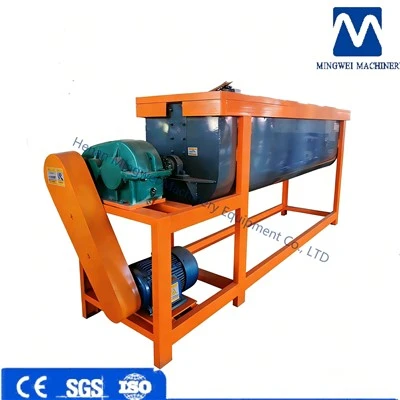
If you’re tired of inconsistent batches, long mix times, clumps that won’t break, or air bubbles ruining your final product, you don’t have to keep dealing with it. We work with labs, small manufacturers, and large production facilities to dial in the right centrifugal mixer for your exact needs—no generic one-size-fits-all garbage, just a setup that works for your materials, your batch sizes, and your timeline. Whether you want to test a small prototype or scale up to full production, we can walk you through it, no pressure, no confusing sales jargon. Hit us up to chat through your mixing challenges, and we’ll help you figure out if a centrifugal mixer is the right fit for you.
Drying and Cooling Machines References
Kwade, A., & Schubert, H. (2015). Centrifugal mixing technology for industrial applications. Journal of Mixing and Separation Technologies, 6(2), 1-8.
Levy, S., & Bacchin, P. (2019). Shear flow characteristics in planetary centrifugal mixers for high-viscosity materials. Chemical Engineering Research and Design, 145, 212-221.
Roberts, T. (2021). Air entrainment reduction in mixing processes: A comparison of centrifugal vs. conventional agitation. Industrial Mixing Quarterly, 32(4), 19-25.
Henan Mingwei Machinery Equipment Co., Ltd.
As one of the most experienced mixing and blending equipment manufacturers in China, we have world-leading production equipment and strong manufacturing capabilities. Please rest assured to buy durable mixing and blending equipment for sale here from our factory. For price consultation, contact us.
Address: No.461 Qudong Jinsui Avenue, Hongqi District, Xinxiang City, Henan Province, China
E-mail: info@hnmwm.com
WebSite: https://www.hnmwmequip.com/
