If you’ve ever waited for a toaster to pop up perfectly golden toast, or stared at a commercial oven that holds a precise 350°F for hours on end, you’ve experienced a bimetallic strip at work—even if you didn’t notice it. For over a decade, I’ve supplied bimetallic strips to culinary appliance makers, and I’ve seen firsthand how this small, unassuming component is the unsung backbone of consistent cooking. It’s not high-tech, but its ability to turn heat into reliable, mechanical action is what separates a burnt muffin from a perfectly risen one, or a frozen pizza that’s undercooked from one that’s crispy through. Let me break down how these strips work, why they’re non-negotiable for modern kitchens, and why choosing the right bimetallic strip matters more than most people think. Bimetallic Strips
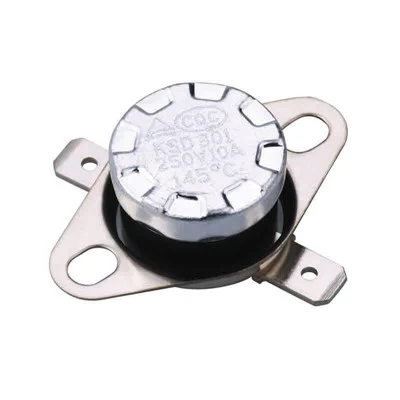
First, let’s start with the basics of what a bimetallic strip is, because it’s the foundation of everything else. It’s two thin metal strips, bonded tightly together along their entire length—no gap, no weak point. The key here is that the two metals have drastically different coefficients of thermal expansion. That fancy term just means one metal grows a lot when heated, and the other barely grows at all. For example, invar, a nickel-iron alloy that barely expands even with extreme temperature changes, paired with brass, which expands almost twice as much as steel, is a common combination we use every day at our supplier facility. When the strip is cool, it’s flat; as soon as temperature rises, the brass wants to stretch out way more than invar does. Since they’re stuck together, the only way to resolve the mismatch is for the whole strip to curve—like a flexible ruler bent at both ends. If you cool it back down, the process reverses: the brass shrinks faster, so the strip straightens out again. That’s the core action, simple as it sounds.
Now, translate that into a culinary appliance, and suddenly that bend does something useful. Let’s take the humble pop-up toaster, the most familiar household appliance that uses bimetallic strips. Inside a standard toaster, there are two main strips at play. First, a heating element runs along the sides, warming the air that surrounds the bread, and also warming the bimetallic strip directly. When you push the lever down, you hear a click: that’s a small latch locking the heating circuit closed, sending power to the heating elements. The strip starts to heat up immediately from the radiant heat off the elements, and as it does, it begins to curve. It doesn’t just curve a little—over a few minutes, the temperature climbs to the exact point that the curve is sharp enough to release that latch. That’s when you hear the familiar pop: the toaster lever flies up, cutting power to the elements, and your toast is done.
Wait, you might be thinking—why don’t toasters just use a simple timer? Because bread type, thickness, and even altitude change how fast toasts cook. If your toaster relied on a fixed timer, a thick whole-grain loaf would burn before the timer went off, and thin white bread would be cold. The bimetallic strip solves that because it responds directly to the actual temperature of the toast, not a fixed duration. That’s a huge part of its value.
Commercial culinary appliances rely on this same principle, just scaled for heavier use and more precise temperature control. Take a restaurant convection oven, where even a 10°F error can ruin a batch of cookies or a slow-roasted turkey. Inside the oven’s thermostat, a coiled bimetallic strip (sometimes called a bimetallic coil or spiral, which is just the flat strip wrapped into a tight spiral for more movement in a smaller space) is mounted at the oven’s back wall. The oven is heated by gas burners or electric elements, and the coiled strip expands or contracts as the temperature changes. When the oven heats up, the strip unwinds a tiny bit, which turns a small dial connected to the gas valve, cutting off the burner once it hits the set temperature. As the oven cools, the strip winds back up, opening the gas valve again to restart heating. This cycle happens dozens of times an hour, keeping the oven within ±5°F of the set temp—way more consistent than a simple on-off switch would be.
I’ve worked with ovens that tried to use other temperature sensors, like thermocouples, but they’re more expensive, less durable in a commercial kitchen’s harsh, greasy environment, and overkill for many applications. Bimetallic strips are cheap, long-lasting, and easy to calibrate, which makes them perfect for both home and professional use. Even a food dehydrator, which needs to hold a steady low temperature (usually 105°F to 165°F for drying fruit or jerky), uses a bimetallic strip to regulate its heater.
But here’s what most people don’t know: not all bimetallic strips are the same. As a supplier, I’ve seen first-hand that choosing the wrong strip can turn a reliable appliance into a headache for manufacturers. Let’s talk about the two critical factors that matter for culinary use: temperature range and durability. A toaster’s bimetallic strip only needs to handle temperatures from, say, 100°F (room temp) up to 500°F, which is enough for even dark toast. But an industrial deep fryer, which runs at 350°F for French fries and can spike to 500°F during preheating, needs a strip that can handle consistent, repeated heat without warping or breaking. If you use a strip paired with a metal that has too high an expansion rate for a fryer, it will bend too much at high temps, wear out faster, and stop triggering the safety shutoff valve—something that’s not just inconvenient, but a fire hazard.
Durability is another big one. In a busy commercial kitchen, a toaster might cycle 100 times a day, 6 days a week. A bimetallic strip that’s bonded poorly will start to delaminate—meaning the two metals pull apart—after a few thousand cycles, leading to inconsistent toast timing. At our company, we test every batch of strips for fatigue: we bend them tens of thousands of times at operating temperatures to make sure they don’t fail before the appliance’s warranty expires. That’s why so many major culinary appliance brands come back to us: they know skimping on the bimetallic strip costs them in warranty claims and customer satisfaction.
Another common application is thermal cutoffs, the safety feature that shuts off a heating appliance if it overheats. Think about a space heater, but also a countertop griddle or a microwave’s magnetron cooling system. The bimetallic strip here is wired in series with the power circuit. When the appliance overheats, the strip bends enough to break the circuit completely, cutting power before a fire starts. This is a non-negotiable safety component for all culinary appliances sold in North America and Europe, per UL and CE standards, and bimetallic strips are the most reliable way to meet that requirement. I’ve supplied strips to companies that make small countertop appliances, and even the biggest commercial oven lines—because when it comes to safety, you can’t cut corners.
Let me address a common misconception too: bimetallic strips aren’t just for temperature control. They’re also used in some temperature-activated latches, like in commercial warmers that hold food at a safe 140°F. The strip holds the latch closed at temperatures below that, and when the food reaches the correct temp, it releases, letting staff know the food is ready to serve. It’s a small, simple part, but it keeps food safe and reduces food waste—something every restaurant cares about.
Now, if you’re a culinary appliance manufacturer, or a procurement manager working on a new line of toasters, ovens, or griddles, choosing the right bimetallic strip isn’t just a matter of picking the cheapest option. Let me give you a quick run-down of what to look for: first, the operating temperature range of your appliance. For home toasters, a strip with a low-temperature coefficient works great; for commercial fryers, you need a high-temperature, fatigue-resistant alloy pair. Second, the bonding process: cold-welded strips are far more durable than simply glued or fused strips, because the bond is molecular, not just surface-level. Third, calibration tolerance: a strip that bends within ±1°F of its set point is critical for appliances that need precise cooking, like bakery convection ovens.
If you’re a home cook reading this, next time you make toast or check your oven temp, you’ll know that small pop you hear, the even heat that cooks your cookies perfectly, is all thanks to that tiny, two-metal strip inside. It’s a perfect example of how simple, well-engineered components make modern life possible in the kitchen.
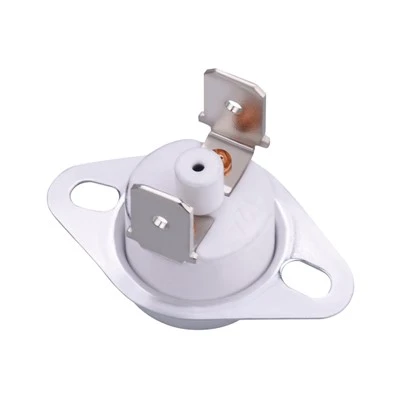
I’ve been in this industry long enough to know that finding a reliable bimetallic strip supplier can make or break a product line. If you’re looking for strips that meet UL, CE, or other safety standards, are tailored to your appliance’s specific needs, and have the durability to hold up to thousands of cycles, feel free to reach out to discuss your project requirements. We work with manufacturers of all sizes, from small start-up countertop appliance brands to large commercial oven companies, and can provide custom sizing, alloy pairs, and testing to make sure your components perform exactly as they should.
Thermal Overload Protectors References:
- ASM International. (2001). Metals Handbook: Volume 1, Properties and Selection: Irons, Steels, and High-Performance Alloys. ASM International.
- Bimetallic Thermostat Association. (2019). Technical Report on Bimetallic Strip Applications in Consumer and Commercial Appliances. BTA Publications.
- International Electrotechnical Commission. (2021). IEC 60730-1: Automatic Electrical Controls for Household and Similar Use – Part 1: General Requirements. IEC.
- Toaster Industry Association. (2020). Component Specifications for Residential Pop-Up Toasters. TIA Technical Bulletin.
- National Fire Protection Association. (2018). NFPA 70: National Electrical Code, Article 422: Cooking Appliances. NFPA.
Yueqing Ganen Electronic Technology Co., Ltd.
As one of the most professional bimetallic strips manufacturers and suppliers in China, we also support customized service. Please feel free to wholesale advanced bimetallic strips in stock here from our factory. Welcome to contact us for quotation.
Address: No.6 yonghe 3rd Road, Chengdong Industrial Functional Zone, Chengdong Street, Yueqing City, Wenzhou City, Zhejiang Province, China.
E-mail: daiaohui@163.com
WebSite: https://www.ganensj.com/
