Determining the capacity of an annealing furnace for a specific production is a crucial step that can significantly impact the efficiency, quality, and cost – effectiveness of your manufacturing process. As a seasoned annealing furnace supplier, I’ve witnessed firsthand how the right furnace capacity can make or break a production line. In this blog post, I’ll guide you through the key factors to consider when making this important decision. Annealing Furnace
Understanding Annealing and Its Requirements
Before delving into capacity determination, it’s essential to understand what annealing is. Annealing is a heat – treatment process used to enhance the physical and mechanical properties of materials, such as metals and glass. It involves heating the material to a specific temperature, holding it there for a set period (soaking time), and then cooling it at a controlled rate.
Different materials have different annealing requirements. For instance, steel may require a different annealing temperature and soaking time compared to aluminum. These requirements will directly influence the furnace capacity you need. If you’re annealing a high – volume of material that requires a long soaking time, you’ll need a larger furnace to maintain a continuous production flow.
Analyzing Production Volume
The first step in determining the furnace capacity is to analyze your production volume. You need to know how much material you plan to anneal per day, week, or month. This information can usually be obtained from your production forecasts.
Let’s say you’re a manufacturer of steel components. You estimate that you need to anneal 10 tons of steel per day. This raw production volume is a starting point, but you also need to consider the batch size. If you prefer to run smaller, more frequent batches, you may need a furnace with a different capacity compared to running fewer, larger batches.
Batch size affects the furnace’s loading and unloading time. Smaller batches may require more frequent loading and unloading, which can increase downtime between cycles. On the other hand, larger batches may take longer to heat up and cool down, which can also impact overall production efficiency.
Considering Material Dimensions
The dimensions of the material you’re annealing are another critical factor. The furnace must be large enough to accommodate the material without overcrowding. Overcrowding can lead to uneven heating and cooling, which can compromise the quality of the annealed product.
If you’re annealing long, thin strips of metal, a furnace with a long, narrow chamber may be suitable. Conversely, if you’re working with large, bulky parts, you’ll need a furnace with a more spacious interior. Consider not only the size of the individual pieces but also how they will be arranged inside the furnace. Some materials may need to be stacked, while others may require special fixturing.
For example, if you’re annealing gears, you may need to use racks or trays to hold them in place during the process. These additional fixtures take up space inside the furnace, so you need to account for their dimensions when determining the furnace capacity.
Factoring in Production Cycle Time
The production cycle time includes the heating time, soaking time, and cooling time. Each of these stages can vary depending on the material being annealed, its thickness, and the desired properties of the final product.
Heating time is the period it takes to raise the temperature of the material to the annealing temperature. It depends on the heat transfer rate of the furnace and the thermal conductivity of the material. Thicker materials generally take longer to heat up than thinner ones.
Soaking time is the duration for which the material is held at the annealing temperature. This time is crucial for achieving the desired changes in the material’s microstructure. Different materials have different optimal soaking times, which can range from a few minutes to several hours.
Cooling time is the time it takes for the material to cool down to room temperature after the soaking period. Controlled cooling is essential to prevent the formation of internal stresses and cracks in the material.
The total production cycle time will affect how many batches you can run in a given period. If your production cycle time is long, you may need a larger furnace capacity to meet your production volume requirements. Conversely, if the cycle time is short, you may be able to use a smaller furnace more efficiently.
Evaluating Furnace Efficiency
Furnace efficiency is an important consideration when determining capacity. A more efficient furnace will consume less energy and reduce your operating costs. There are several factors that contribute to furnace efficiency, including insulation, heating elements, and airflow design.
Good insulation reduces heat loss from the furnace, which means less energy is needed to maintain the desired temperature. High – quality heating elements also play a role in efficiency, as they can convert electrical energy into heat more effectively. Additionally, a well – designed airflow system ensures uniform heating and cooling throughout the furnace chamber.
When comparing different furnace models, look for energy – efficiency ratings and ask about the manufacturer’s design features. A more efficient furnace may have a higher upfront cost, but it can save you money in the long run through reduced energy consumption.
Accounting for Future Growth
It’s important to consider your future production needs when determining the furnace capacity. Your business may grow over time, and you may need to increase your annealing production volume. Investing in a furnace with some extra capacity can save you from having to purchase a new furnace in the near future.
However, you don’t want to over – invest in a furnace that’s much larger than your current needs. This can lead to higher upfront costs, increased energy consumption, and inefficient operation if you’re not using the full capacity of the furnace. A good approach is to estimate your growth rate over the next few years and choose a furnace that can accommodate this growth without being overly large for your current production.
Conclusion
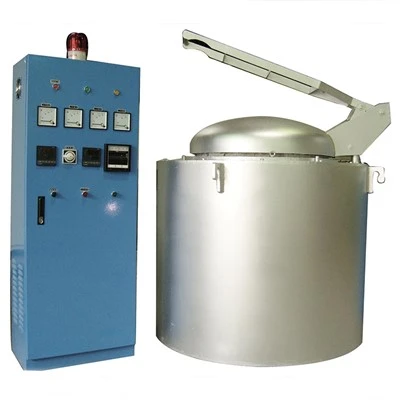
Determining the capacity of an annealing furnace for a specific production is a complex process that requires careful consideration of multiple factors, including production volume, material dimensions, production cycle time, furnace efficiency, and future growth. As an annealing furnace supplier, I’m here to help you navigate this process and find the right furnace for your needs.
Car-Bottom Forging Furnace If you’re in the market for an annealing furnace and need assistance in determining the appropriate capacity for your production, I encourage you to reach out. Our team of experts can provide personalized advice and guidance based on your specific requirements. We offer a wide range of annealing furnaces with different capacities and features to meet the diverse needs of our customers. Contact us to start a conversation about your annealing furnace needs and take the first step towards optimizing your production process.
References
- ASM Handbook Volume 4: Heat Treating. ASM International.
- Heat Treatment Principles and Techniques. L. C. Zhang.
- Industrial Furnaces: Principles, Construction, and Operation. G. E. Totten.
Danyang Dingfeng Industrial Furnace Co., Ltd.
Danyang Dingfeng Industrial Furnace Co., Ltd. is one of the most experienced annealing furnace manufacturers and suppliers in China, also supports customized service with low price. Please feel free to wholesale high quality annealing furnace made in China here from our factory. For pricelist, contact us now.
Address: Lizhuang Economic Development Zone, Danyang City
E-mail: saleszk@dffurnace.com
WebSite: https://www.dffurnace.com/
