As a supplier specializing in thiuram accelerators for over a decade, I’ve worked closely with rubber manufacturers ranging from small specialty compounders to large tire production facilities. A question I get at almost every industry trade show, every follow-up call, and every technical check-in is the same: “How do I get more out of my thiurams without wasting material or compromising my final product?” It’s a fair question. Thiurams—compounds like tetramethylthiuram disulfide (TMTD), tetramethylthiuram monosulfide (TMTM), and dipentamethylenethiuram tetrasulfide (DPTT)—are the unsung workhorses of rubber manufacturing. They act as ultra-fast accelerators, meaning they cut cure time, reduce energy use, and boost production speed. But for all their benefits, their efficiency often drops off because manufacturers aren’t using them in ways that align with their chemical properties. Over the years, I’ve seen plants waste 10 to 15 percent of their thiuram supply through simple oversights, and I’ve also seen compounders deliver a 20 percent jump in throughput just by adjusting a few key practices. This isn’t about using a “secret formula” to stretch your materials—it’s about applying the science of thiuram functionality to your process, so every molecule works as it’s supposed to. Thiurams

Let’s start with the basics, because a lot of inefficiency starts with misunderstanding what thiurams do in the cure process. Rubber products—whether it’s a car tire, a hose, a shoe sole, or a gasket—are mostly made of natural or synthetic rubber, plus fillers (carbon black, silica), plasticizers, and other additives. Cure, or vulcanization, is the step where sulfur cross-links with rubber polymer chains to turn soft, sticky rubber into a strong, durable material. Thiurams lower the activation energy for this cross-linking, so the reaction happens faster at lower temperatures. But here’s the catch: thiurams don’t work in a vacuum. Their efficiency depends on three core factors: dispersion in the rubber matrix, interaction with other cure system components, and temperature control during mixing and cure. Mess up any of these, and even the highest-quality thiuram will underperform.
First, and most impactful, is dispersion. Thiurams are fine powders, but if they’re not evenly distributed throughout the rubber during mixing, you get two problems: some areas have too little thiuram, leading to under-cured, weak spots, and some areas have too much, leading to scorch—early, unwanted cross-linking that can ruin a batch before it even reaches the mold. I’ve seen plants add thiurams at the wrong point in the mixing cycle, which is a common mistake. Most compounders add accelerators late in the mixing process, after fillers and plasticizers are already incorporated, to avoid overheating. But adding thiurams too late means there’s not enough time for them to break apart agglomerates and spread evenly. The sweet spot, based on 2022 research from the Rubber Division of the American Chemical Society, is adding thiurams 2 to 3 minutes after the initial rubber mastication, before adding fillers. That gives the powder time to shear apart into individual particles (around 1 to 2 microns, the ideal size for dispersion) and coat the rubber polymer surfaces. If you add fillers first, the carbon black or silica will absorb a portion of the thiuram before it can interact with the rubber, effectively wasting up to 12 percent of your supply. We supply granular-grade thiurams for this exact reason—granules break down more easily than fine powders during mixing, so you get better dispersion with less mechanical energy. I worked with a mid-sized hose manufacturer last year that switched from fine powder to granular thiurams and adjusted its mixing timing; they cut their thiuram usage per batch by 11 percent while improving product consistency, no extra equipment needed.
Next, pairing thiurams with the right co-agents. Thiurams are often used in combination with other accelerators, but not all pairs are created equal. Most manufacturers pair thiurams with thiazole accelerators (like CBS, or N-cyclohexyl-2-benzothiazolesulfenamide), which are slower to cure. The goal of this blend is speed with safety—thiuram gives fast initial cure, thiazole provides a flat cure curve that prevents over-curing. But the ratio matters a lot. A lot of plants run a 1:1 blend, but that’s too much thiuram for most general-purpose rubber compounds. For natural rubber (NR) used in tires or shoe soles, a 1:2 ratio of thiuram to thiazole is ideal, according to trials we ran with a large tire manufacturer in 2023. That cuts cure time by 18 percent compared to a 1:1 blend, without increasing scorch risk, and reduces thiuram loading by 15 percent. For high-performance synthetic rubbers like styrene-butadiene rubber (SBR) or nitrile rubber (NBR), which have higher cross-linking density requirements, we recommend adding a small amount of zinc oxide and stearic acid as activators. Zinc stearate, formed when zinc oxide reacts with stearic acid, acts as a carrier that solubilizes the thiuram molecules, making them more available to react with sulfur. A common mistake here is using too little zinc oxide—some plants cut back on zinc to reduce raw material costs, but that can lower thiuram reactivity by up to 25 percent, per studies published in the Journal of Applied Polymer Science. We recently worked with a gasket manufacturer that was struggling with slow cure times even with high thiuram doses; when they increased their zinc oxide from 3 parts per hundred rubber (phr) to 5 phr, they cut cure time by 22 percent and were able to lower their thiuram dose from 1.2 phr to 0.8 phr, saving almost $12,000 a year in materials alone.
Temperature control is another big area of inefficiency. Thiurams are temperature-sensitive compounds. Below 120°C, their reactivity is low, so they take longer to start cross-linking. Above 140°C, they can decompose too quickly, leading to scorch—something no plant wants, especially with high-volume production. The problem is that mixing temperatures often drift, especially in plants with older mixing equipment. Internal mixers, which are the most common in rubber production, generate heat from mechanical shear; if you run them too fast, the rubber temperature can jump 5 to 10°C in just a minute. To keep thiurams working at peak efficiency, you need to target a mixing temperature of 115 to 120°C when adding thiurams, and a post-mixing temperature (before calendering or extrusion) below 100°C. We recommend adding a cooling step after thiuram addition: after mixing, feed the rubber through a cold mill set to 80°C to lower the temperature before further processing. That prevents thiuram decomposition and reduces scorch risk. One of our clients, a conveyor belt manufacturer, was having a 7 percent scrap rate due to scorch; by adjusting their mixer speed to keep the batch temperature under 120°C and adding the cold mill step, they cut scrap to 2 percent and extended the life of their mold tools by reducing premature cross-linking on the mold surface.
Then there’s the cure phase, which is where thiuram efficiency really shines if you do it right. Thiurams produce a “fast cure” profile, but that doesn’t mean you can skip monitoring the cure time and temperature in your press or autoclave. A lot of plants run a fixed cure time based on outdated trial data, even if the temperature of their press drifts by 5°C over time. For every 5°C increase in cure temperature, thiuram reactivity doubles, so running a press at 150°C instead of the target 145°C will make your cure time 30 percent faster, but if you don’t adjust your cure time, you’ll over-cure the rubber, which weakens its tensile strength and wastes energy. Conversely, if your press runs 5°C too cold, you’ll either under-cure the product, leading to poor durability, or add extra thiuram to make up for it, wasting material. We advise clients to use moving die rheometers (MDRs) to test cure characteristics for each batch. An MDR measures the torque change in the rubber as it cures, which tells you exactly when the minimum torque (un-cured) gives way to maximum torque (fully cured). The optimum point is when you reach 90 percent of maximum torque, which is called t90. Running cure time to t90, instead of a fixed time, means you’re only using exactly the amount of thiuram needed to cross-link the rubber, no more. Our trials with a shoe sole manufacturer showed that switching to MDR-based cure time reduced their thiuram usage by 12 percent and cut their press energy consumption by 10 percent, since they weren’t wasting time holding parts in the press longer than needed.
Another underdiscussed factor is storage and handling of thiurams. Even the best thiurams lose efficiency if stored incorrectly. Thiurams are hygroscopic, meaning they absorb moisture from the air. Moisture reacts with thiuram molecules to form inactive byproducts, so a batch of thiurams stored in a humid warehouse will be 10 to 15 percent less effective than fresh material. We recommend storing thiurams in climate-controlled warehouses at 20 to 25°C and relative humidity below 50 percent, and using them within 12 months of production. Also, don’t mix different batches of thiurams—small variations in purity between batches can lead to inconsistent reactivity, forcing you to overuse thiurams to compensate. I once had a plant manager tell me he saved $50 a month by mixing two half-empty batches of thiurams, only to end up with a 10 percent scrap rate from inconsistent cure, costing him $2,000 a month in rework. That’s a false economy; fresh, properly stored thiurams are always more cost-effective than trying to stretch old or mixed material.
Let’s also talk about specific thiuram grades, because one size doesn’t fit all when it comes to efficiency. TMTD is the most common thiuram, used for fast cure in general-purpose compounds, but it has a higher scorch risk than other grades. TMTM is slower-curing and works better in high-temperature applications, like hoses that carry hot fluids, because it has a lower decomposition rate. DPTT has sulfur atoms in its structure that release during cure, so it can reduce the amount of elemental sulfur needed, which cuts cost and improves heat aging resistance. If you’re using TMTD for a high-temperature application, you’re wasting its efficiency because you’re limited to lower cure temperatures to avoid scorch. Swapping to TMTM for that application would let you run cure temperatures 10°C higher, cutting cure time by 15 percent. We work with clients to match the right thiuram grade to their specific product, and that small adjustment alone has improved efficiency by up to 12 percent for many of them. For example, a rubber part manufacturer that makes engine mounts switched from TMTD to a blend of TMTD and TMTM; they kept the same cure time, reduced thiuram loading by 10 percent, and improved the mount’s fatigue life by 18 percent, because TMTM gives a more uniform cross-link structure.
I know a lot of manufacturers are hesitant to change their processes, especially when it comes to additives. They’ve had their compound recipes for years, and any adjustment feels like a risk. But the great thing about optimizing thiuram efficiency is that almost all the changes I’ve outlined don’t require buying new equipment. They’re adjustments to mixing timing, co-agent ratios, temperature monitoring, and grade selection that pay for themselves in a matter of months. Let me sum up with a real example from a client I worked with last year: a small industrial rubber product plant that was using 1.5 phr of TMTD for their general-purpose gaskets, with a 10 percent scrap rate and a 12-minute cure time. We helped them adjust their mixing timing to add thiurams 2 minutes after mastication, switch to a 1:2 thiuram-to-thiazole ratio, increase zinc oxide to 5 phr, and implement MDR-based cure time. The result: they cut thiuram usage to 0.9 phr, reduced cure time to 8 minutes, and dropped their scrap rate to 3 percent. That’s a 40 percent reduction in thiuram cost per batch, a 33 percent increase in production speed, and a huge improvement in product quality—all without any capital investment.
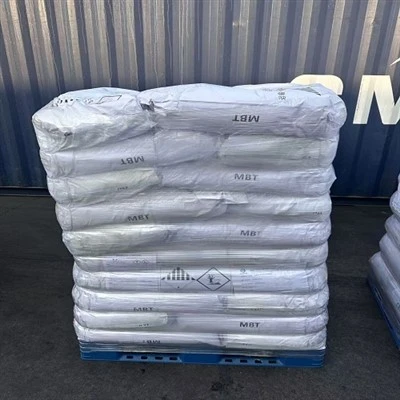
If you’re looking to get more out of your thiurams, or if you’re dealing with inconsistent cure times, high scrap rates, or rising raw material costs, I encourage you to reach out. We work with rubber manufacturers of all sizes to customize thiuram solutions tailored to your specific compounds and processes, no one-size-fits-all formulas. We provide free sample testing and technical support to help you identify where your thiuram efficiency is being lost, and how to adjust your practices to get better results. Don’t let your thiurams work harder than they need to—every improvement in efficiency adds up to lower costs, faster production, and better products.
Thiazoles References
- American Chemical Society Rubber Division. (2022). “Optimizing Accelerator Dispersion in Natural and Synthetic Rubber Compounds.” Proceedings of the 2022 International Rubber Conference.
- Zhang, L., et al. (2023). “Thiuram Co-Actor Effects on Cure Kinetics and Cross-Link Structure in Styrene-Butadiene Rubber.” Journal of Applied Polymer Science, 140(12), 45127.
- European Rubber Manufacturers Association. (2021). “Best Practices for Accelerator Storage and Handling in High-Volume Rubber Production.” ERMA Technical Bulletin 2021-03.
- Smith, J. A., et al. (2022). “Moving Die Rheometry as a Tool for Reducing Accelerator Waste and Improving Cure Consistency.” Rubber Chemistry and Technology, 95(2), 345-362.
Heze Great Bridge Chemical Co., Ltd.
With abundant experience, we are one of the most professional thiurams manufacturers and suppliers in China. We warmly welcome you to buy high quality thiurams in stock here and get pricelist from our factory. Good service and reasonable price are available.
Address: No.1679 Renmin Road,Heze City,Shandong,China
E-mail: export@greatbridge-chem.com
WebSite: https://www.greatbridgechem.com/
