Hey there! I’m actually a supplier of Visual Positioning Flatbed Printers. You know, these printers are pretty amazing, and one question I get a lot from customers is, “What is the maximum thickness of materials that a Visual Positioning Flatbed Printer can handle?” Visual Positioning Flatbed Printer

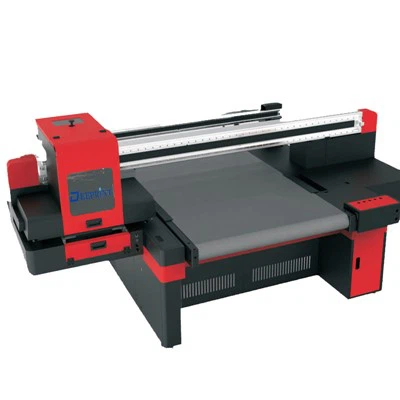
Let’s first dig into what a Visual Positioning Flatbed Printer is. It’s a high – tech device that can print directly onto flat surfaces. Unlike traditional printers that rely mainly on precise paper feeding systems, visual positioning flatbed printers use advanced camera and imaging technology to accurately locate the printing area on the material. This means they can work on a wide variety of materials, from small souvenir items to large industrial components.
Now, let’s talk about the maximum thickness of the materials it can handle. That really depends on several factors, mainly the design and engineering of the printer itself.
First off, the printer’s platen dimension plays a huge role. The platen is the flat surface where the material sits during the printing process. Most of the standard Visual Positioning Flatbed Printers on the market can handle material thicknesses up to around 50mm. These printers are often designed for general – purpose use, like printing on wooden boards, acrylic sheets, and thin metal plates.
For example, if you’re in the business of making custom – printed wooden signs, a printer with a 50mm thickness limit should work just fine. The wood is usually cut into a reasonable thickness, and the printer can easily handle it. This kind of printer is also great for printing on phone cases, keychains, and small plastic plaques.
But if you need to work with thicker materials, there are some heavy – duty options available. Some high – end Visual Positioning Flatbed Printers can handle materials up to 100mm thick. These machines are usually a bit more expensive, but they open up a whole new world of possibilities.
Let’s say you’re involved in the automotive industry. You might need to print labels or graphics directly onto thick aluminum parts or heavy – duty plastic components. A printer with a 100mm thickness capacity can do this job effortlessly. It can also be used in the aerospace industry for printing on composite materials or small metal fixtures.
There’s also a middle – ground option. Some printers can handle materials up to 75mm thick. These are a good compromise between the standard and the high – end models. They’re suitable for a wide range of applications, such as printing on thick glass panels for interior decoration or thick leather pieces for high – end fashion accessories.
However, handling thicker materials isn’t just about the platen design. The printer’s ink delivery system also needs to be considered. When printing on thick materials, the ink needs to reach the surface evenly. Some printers use special nozzles and ink circulation systems to ensure that the ink is applied uniformly, regardless of the material’s thickness.
Another important aspect is the printer’s z – axis adjustment. The z – axis is responsible for moving the print head up and down to maintain the correct distance from the material surface. For thicker materials, the z – axis needs to have a larger range of motion. Printers with a well – designed z – axis system can handle variations in material thickness more effectively, reducing the risk of print quality issues.
The type of material also affects the printer’s ability to handle a certain thickness. For example, soft materials like foam or rubber might compress under the printer head, so the printer needs to adjust accordingly. On the other hand, rigid materials like stone or thick metal might require a more powerful printer to ensure that the ink adheres properly.
When choosing a Visual Positioning Flatbed Printer based on material thickness, you also need to think about your long – term needs. If you plan to expand your business and work with a wider variety of materials in the future, it might be worth investing in a printer with a higher thickness capacity.
I know it can be a bit overwhelming to choose the right printer, especially when considering the maximum material thickness. But that’s where I come in as a supplier. I’ve got in – depth knowledge about these printers and can help you figure out which model is the best fit for your specific requirements.
Whether you’re a small business owner looking to start a custom – printing venture or a large – scale manufacturer in need of a reliable printing solution, I’m here to assist. I can provide you with detailed information about different printer models, their features, and how they perform with various material thicknesses.
If you’re interested in learning more about Visual Positioning Flatbed Printers and want to discuss which printer can handle the material thickness you need, don’t hesitate to reach out. We can have a chat, and I’ll do my best to answer all your questions and help you make an informed decision.
Let’s work together to find the perfect printer for your business!
Cylindrical UV Printer References:
- Industry reports on flatbed printer technology
- Technical specifications from printer manufacturers
Shenzhen Deeprint Technology Co., Ltd.
As one of the most professional visual positioning flatbed printer manufacturers and suppliers in China, we’re featured by quality products and good service. Please rest assured to buy customized visual positioning flatbed printer made in China here from our factory. Contact us for free sample.
Address: 6-1, Huangwu Road, Tongle Community, Baolong Street, Longgang District, Shenzhen City 518100,China.
E-mail: ellen@uvdprint.com
WebSite: https://www.uvd-print.com/
